

The Art of Jewelry Polishing: Essential Techniques from Artinian Atelier Academy
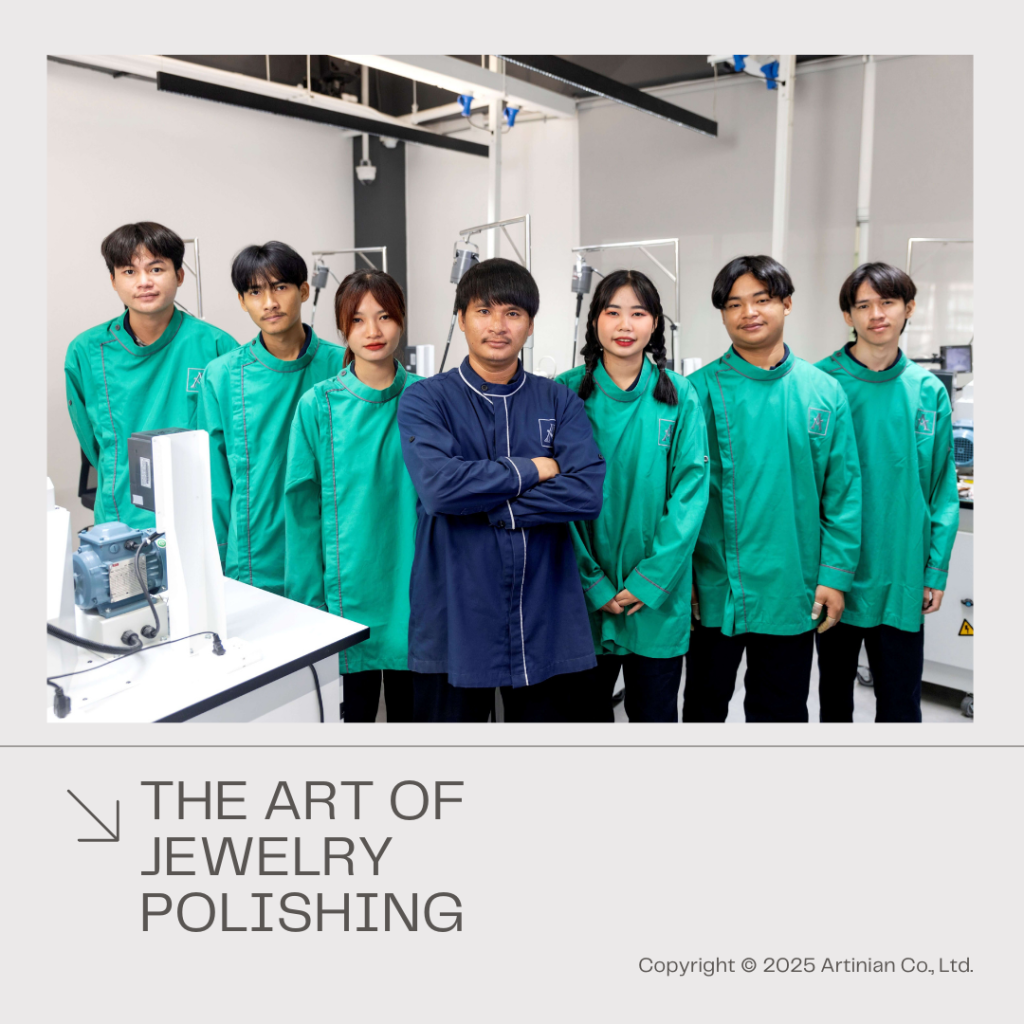
Jewelry polishing techniques and learned skills transform raw metals, benched gold mounts or crafted metals surfaces into shining, radiant fine jewelry valuables. Polishing is a very important part of the jewelry manufacturing process. As Artinian Atelier Academy Polishing department instructor explains “achieving the right polishing standard and that perfect shine requires skill, proper tools, an attentive personal trait, and years of practice.
Essential Equipments are needed for every polisher’s workbench. Important core tool is powerful polishing rotary buffer motor at the right power stability, precision, durability and rotation control.
The Artinian toolkit includes varying grit sizes and compounds for different stages, from scratch removal to high gloss finish, Diamond compound wax, finger felts for ring interiors, felt discs for shanks, and bristle brushes, silicone wheels, microfiber cloths for delicate areas like earring posts.
Preparation is important before polishing gold, or platinum, proper preparation saves time. Sand pieces down to medium-grade paper for initial surface smoothing, also progressive refining is an important tactical approach to understand each metal. In preparation, polisher should really understand contour smoothing and fine detailing requirements. Preparatory work for polishing saves the daily tasks time and allows work to be completed faster and cleaner.
The focused polishing process start with grease on dedicated mops, should be noted that mix compounds should be never mixed on the same mop. Jewelry item should be applied with skilled, attention and with controlled pressure, keeping the piece moving constantly while rotating to ensure even coverage.
Platinum is especially difficult to polish, and polisher should expect to spend significantly more time than with gold or silver.
A small hack when using the high polish rouge on a separate mop, apply it to only 50-50 of the mop’s surface. This creates a “polish-on polish-off” effect that enhances the final shine, especially on gold pieces.
Special techniques and approaches needed for specific items of jewelry as well as specific parts of jewelry. The surface, the shape and intricacy of the jewelry part under polish should be significantly taken under consideration. Ring interiors, finger felts with plastic inserts provide better stability than wooden ones. When polishing semi circled outer section shanks, approach at angles that follow and preserve the curve. A big part of the polisher’s mindset includes the 3D form maintenance of the polished jewelry item.
For delicate posts on earrings, use hairbrushes with controlled up-and-down movements.
Safety First is a requisite for the polishing process. Polishers should always be familiar with available PPEs and use eye protection to shield against flying particles. Use leather pieces to hold jewelry that heats up during polishing to prevent burns. Proper safety gear is essential at always applied such as gloves for grip, goggles for eye safety, and an apron to protect from dust and debris.
Artinian Safety processes ensure protection. Remember, a skilled polisher is a safe polisher!
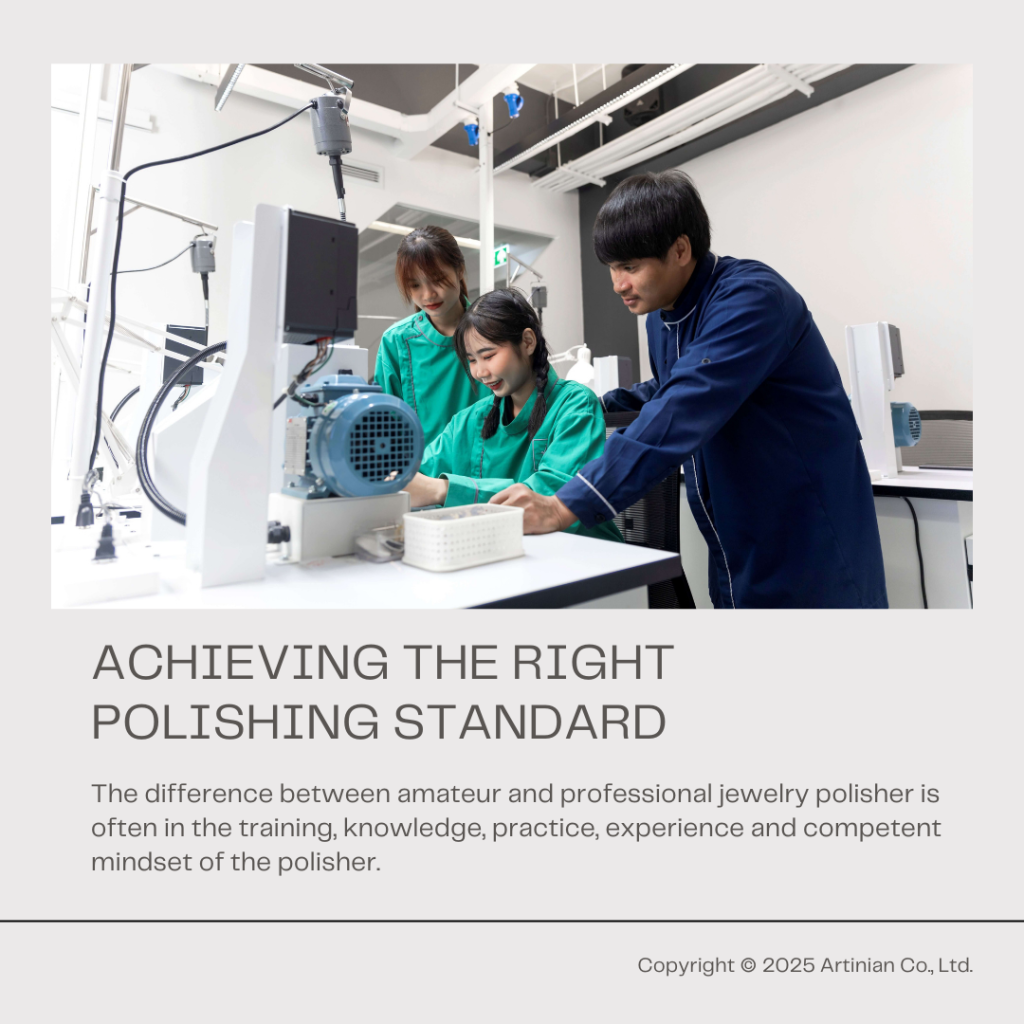
The difference between an amateur and professional jewelry polisher is often in the training, knowledge, practice, experience and professionalism attitude of the polisher.
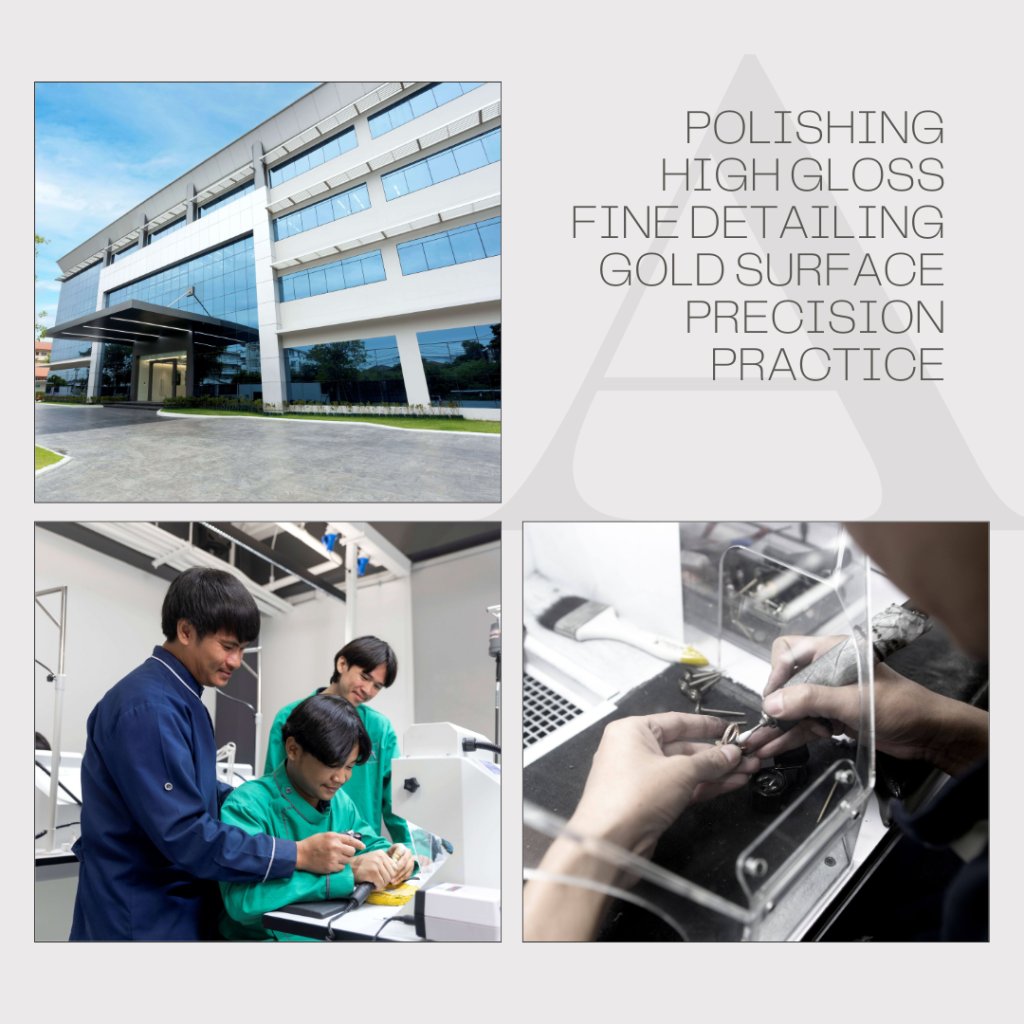
At Artinian Atelier Academy we focus to pass this vocational knowledge through our learn, practice and work program which lasts for 6 months. With this pioneering educational approach, and persistent teacher to intern guidance we ensure that even challenging metals can achieve that desired mirror finish in the hand of our trained polishers and ensure that the fine jewelry finishes truly exceptionally as is expected from Artinian standards.


